

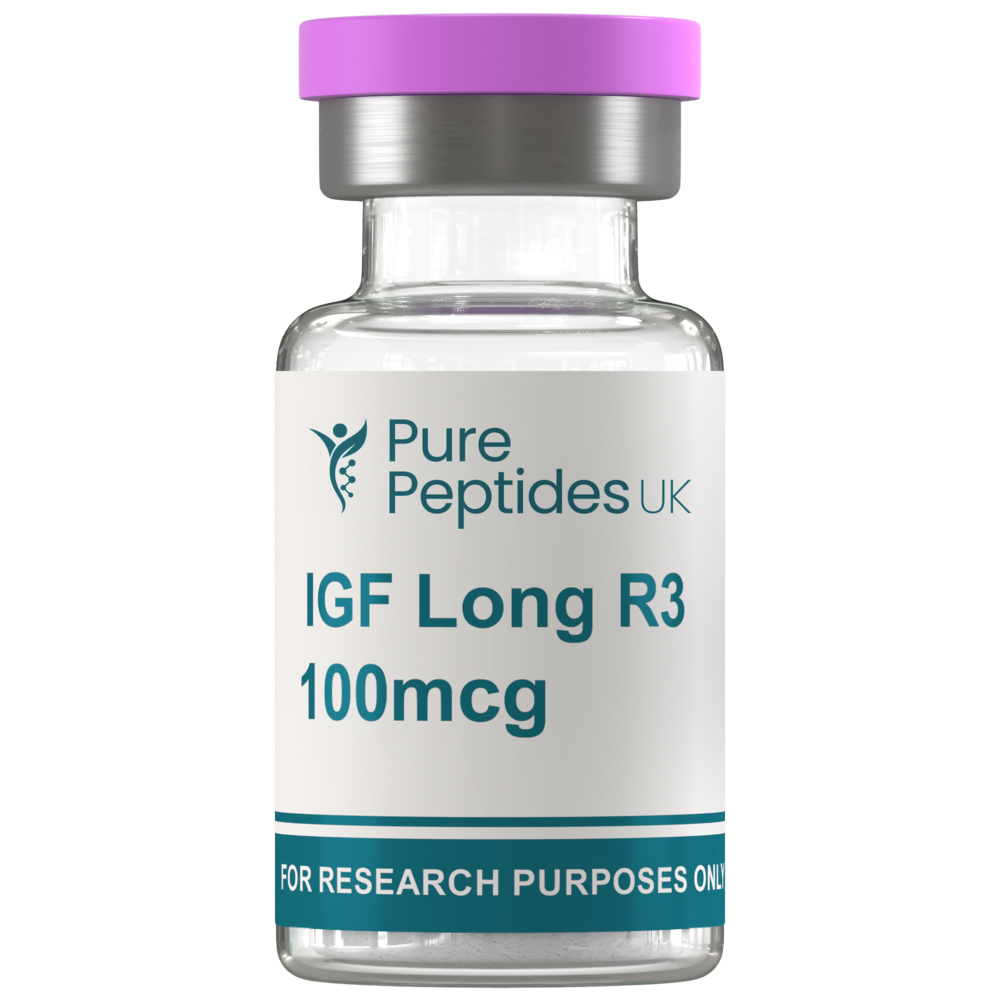
IGF-1 Long R3 100mcg – Research Peptide Overview and Product Information
Understanding IGF-1 Long R3
IGF-1 Long R3 (Insulin-Like Growth Factor 1 Long Arg3) is a modified analogue of naturally occurring insulin-like growth factor 1 (IGF-1). It is a peptide of scientific interest because of its interaction with biological pathways associated with cell growth, differentiation, and metabolic regulation.
The 100mcg designation refers to the stated quantity of material in the product presentation. For researchers and individuals investigating peptide chemistry, understanding the molecular characteristics of IGF-1 Long R3 is an important starting point.
What Makes IGF-1 Long R3 Different?
IGF-1 Long R3 is structurally modified compared with native IGF-1. Its modified amino acid sequence includes an arginine substitution at position 3 and an extended N-terminal sequence.
These modifications influence its interaction with IGF-binding proteins. This makes IGF-1 Long R3 an interesting subject in laboratory research examining growth-factor signalling.
Important research considerations include:
-
Molecular structure and amino acid sequence.
-
Interaction with insulin-like growth factor binding proteins.
-
Stability under controlled laboratory conditions.
-
Analytical identification and characterisation.
-
Receptor-binding and signalling research.
IGF-1 Long R3 100mcg: Product Information
When evaluating a product labelled IGF-1 Long R3 100mcg, it is important to review its documentation rather than relying exclusively on marketing descriptions.
Relevant documentation may include:
-
Product identity and molecular information.
-
Batch-specific analytical testing.
-
Certificate of Analysis (CoA).
-
Purity testing methodology.
-
Storage and handling instructions.
-
Manufacturer and supplier traceability.
A credible research-material evaluation should prioritise independently verifiable documentation and transparent product information.
Research Considerations and Quality Assessment
Research peptides require appropriate quality-control procedures. Analytical testing can help establish whether a material corresponds to its stated identity and whether its measured purity meets specified laboratory criteria.
Common analytical approaches include high-performance liquid chromatography (HPLC) and mass spectrometry (MS).
These methods provide complementary information about sample composition and molecular characteristics. However, a reported purity percentage alone does not establish sterility, biological activity, clinical safety, or suitability for human use.
Frequently Asked Questions
What is IGF-1 Long R3 100mcg?
IGF-1 Long R3 100mcg is a product designation for a quantity of a modified insulin-like growth factor 1 analogue.
What does Long R3 mean?
Long R3 describes structural modifications to the IGF-1 peptide, including an arginine substitution and an extended amino acid sequence.
How is IGF-1 Long R3 studied?
It is investigated in laboratory research involving growth-factor biology, receptor interactions, and cellular signalling.
What should a Certificate of Analysis contain?
A useful certificate should identify the tested batch, analytical methods, results, testing date, and laboratory responsible for the analysis.
Is IGF-1 Long R3 approved for human consumption?
Research-grade peptide materials should not be assumed to be approved medicines or suitable for human consumption. Regulatory status and intended use should be independently verified.
Be the first to review “IGF-1 Long R3 100mcg”
Related products
Reviews
There are no reviews yet.