

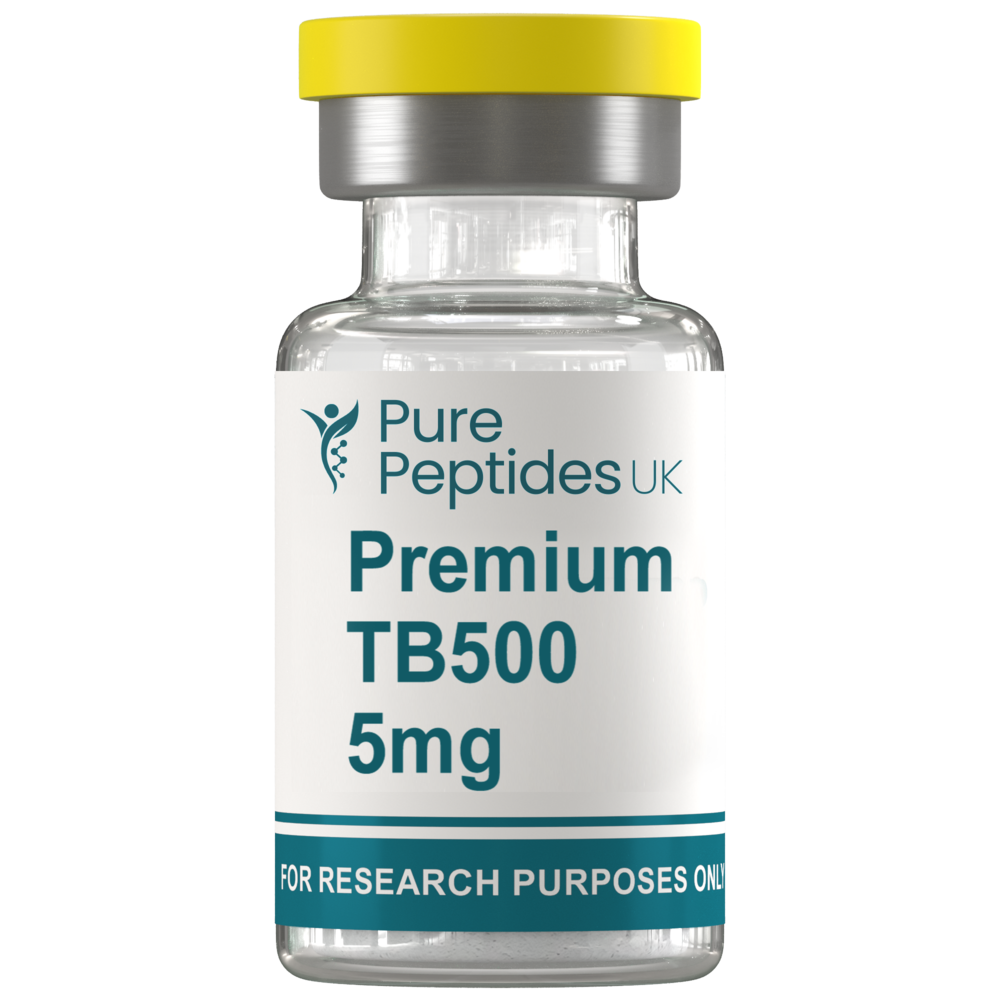
Premium Thymosin Beta 4 – 5mg (TB-500): Research Product Information
Thymosin Beta 4, commonly associated with the name TB-500, is a peptide that has attracted scientific interest for its biological functions and potential role in cellular research. Premium Thymosin Beta 4 – 5mg (TB-500) is a research-focused product intended for those interested in understanding peptide science, laboratory research, and the characteristics of synthetic peptides.
When researching a Pure Peptide product, understanding its identity, composition, quality documentation, and regulatory status is essential. Making informed decisions requires looking beyond product names and marketing descriptions.
What Is Thymosin Beta 4 (TB-500)?
Thymosin Beta 4 is a naturally occurring peptide found in various tissues throughout the human body. It is known for its interaction with actin, a protein involved in important cellular processes.
In scientific research, Thymosin Beta 4 has been investigated for its involvement in cell migration, tissue biology, and other biological mechanisms.
TB-500 is a name commonly used in the research peptide marketplace. However, it is important not to assume that every product marketed under this name has an identical composition or is equivalent to the naturally occurring full-length Thymosin Beta 4 molecule.
Researchers should always examine the exact molecular identity and analytical documentation of a product.
Premium Thymosin Beta 4 – 5mg: Product Overview
The 5mg designation identifies the stated quantity of material in the product presentation. Buyers and research professionals should verify the actual composition, concentration, storage requirements, and analytical specifications using the manufacturer’s documentation.
Important product considerations include:
- Product name: Thymosin Beta 4 (TB-500)
- Listed quantity: 5mg
- Product category: Research peptide
- Research interest: Peptide biology and cellular mechanisms
- Quality considerations: Identity testing, purity analysis, and batch documentation
- Intended context: Laboratory research where legally permitted
A reliable product description should distinguish verified laboratory specifications from unsubstantiated marketing statements.
Why Is Peptide Quality Important?
Quality is one of the most important considerations when evaluating any synthetic peptide.
A product’s advertised purity percentage alone does not establish its identity, safety, or suitability for a particular research application.
Relevant documentation may include:
1. Certificate of Analysis (COA)
A batch-specific Certificate of Analysis provides information about the testing performed on a particular product batch.
2. Peptide Identity
Analytical methods such as mass spectrometry can help establish whether a tested sample corresponds to its stated molecular identity.
3. Purity Assessment
High-performance liquid chromatography (HPLC) is commonly used in analytical laboratories to assess peptide purity and identify certain impurities.
4. Batch Traceability
Batch identification and appropriate documentation help support quality assurance and product traceability.
5. Storage and Handling Information
Peptides can have specific stability and storage requirements. Appropriate technical documentation should explain relevant handling considerations.
Thymosin Beta 4 Research: What Does Science Investigate?
Scientific interest in Thymosin Beta 4 includes its relationship with actin regulation, cellular migration, and tissue biology.
These mechanisms are relevant to several areas of laboratory investigation.
However, early-stage research findings should not be interpreted as proof of clinical effectiveness. Research involving laboratory models does not automatically establish safety or efficacy in humans.
There is also an important distinction between Thymosin Beta 4 research and claims made about commercially marketed TB-500 products. The exact composition of a particular product must be established independently.
Important Safety and Regulatory Considerations in the USA
Consumers and researchers in the United States should understand the regulatory status of research peptides before considering their acquisition or use.
Thymosin Beta 4 and products marketed as TB-500 should not be assumed to be FDA-approved medications.
Research-only labeling does not establish that a product is safe for human consumption, injection, or therapeutic use.
There may also be additional restrictions involving manufacturing, distribution, labeling, importation, and intended use.
Anyone evaluating these products should consult appropriate regulatory guidance and qualified healthcare professionals rather than relying on online product descriptions or anecdotal reports.
Frequently Asked Questions
What is Thymosin Beta 4?
Thymosin Beta 4 is a naturally occurring peptide studied for its involvement in actin regulation and various cellular processes.
What does TB-500 mean?
TB-500 is a name used in the research peptide marketplace. Product composition should be verified rather than assumed from the name alone.
What does 5mg mean?
The 5mg designation refers to the stated quantity of material in the product presentation. It does not establish concentration, purity, or suitability for human use.
How can peptide purity be evaluated?
Laboratory documentation, including appropriate HPLC and mass spectrometry results, can help evaluate product characteristics.
Is TB-500 FDA-approved for human use?
TB-500 should not be represented as an FDA-approved medication for human treatment.
Final Thoughts
Premium Thymosin Beta 4 – 5mg (TB-500) is a product category associated with growing scientific interest in peptide biology. Understanding its molecular identity, analytical testing, documentation, and regulatory considerations is essential when evaluating any Pure Peptide research product.
Prioritizing transparent specifications, verifiable laboratory documentation, and responsible research practices is a more reliable approach than relying on unsupported performance claims.
Be the first to review “Premium Thymosin Beta 4 – 5mg (TB500)”
Related products
Reviews
There are no reviews yet.